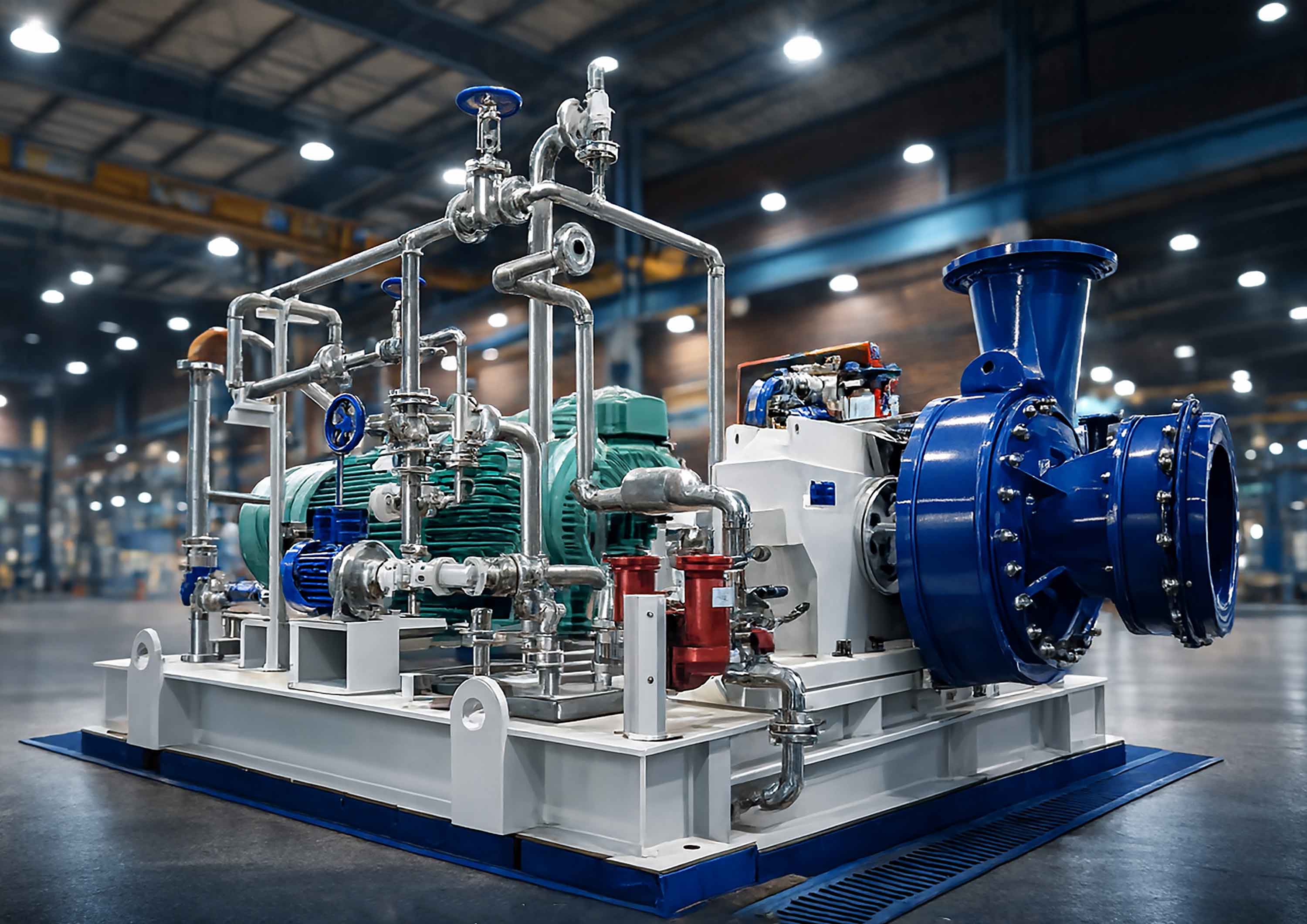
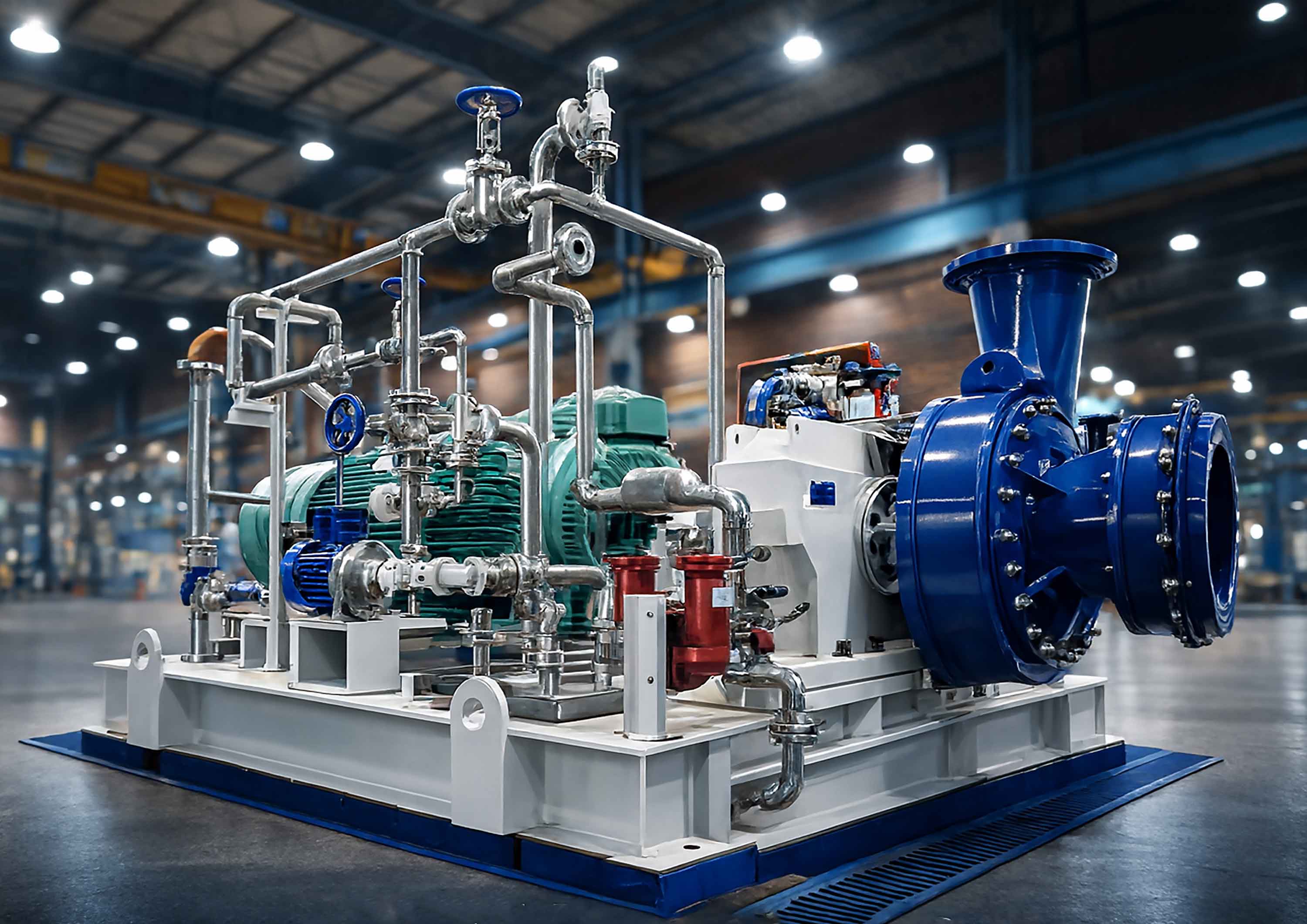
Centrifugal compressors are a type of dynamic compressor capable of achieving moderate pressure ratios and high flow rates, and the principles governing the design and manufacturing of each of their components are based on API 617 and API 672 standards.

Despite their high flow capacity and smooth operation, centrifugal compressors have inherent limitations. They cannot achieve extremely high pressure ratios in a single stage without resorting to very high rotational speeds, which often require complex gearboxes or direct turbine drives. Furthermore, their performance is highly sensitive to changes in gas composition and inlet conditions. Any significant variation in molecular weight, temperature, or pressure can lead to surge or choking phenomena, both of which are detrimental to the compressor's stability and mechanical integrity.

Another major drawback of centrifugal compressors is their poor performance at low flow rates. Unlike positive displacement compressors, they cannot operate efficiently below a minimum flow threshold without recirculating a portion of the discharge gas back to the suction. This recirculation wastes significant amounts of energy and necessitates the use of anti-surge control systems, which add complexity and cost. Additionally, centrifugal compressors are more susceptible to damage from foreign objects or liquid slugging, as their high-speed impellers can be easily unbalanced or eroded, leading to catastrophic failure.

